
The Nervous System and the 3F Responses
Listening to the nervous system and the 3F Fight-Flight-Freeze responses to reconnect with your inner safety.

I. When the body speaks, the soul can be heard
When the body speaks, something deeper than the mind is often seeking to be heard. The autonomic nervous system is the conductor of our inner balance, it regulates energy, emotions, digestion, sleep, and above all our ability to feel safe, within ourselves and in connection with others.
The question of safety
Continuously, sometimes below the threshold of consciousness, it scans the environment and responds to a simple question, am I safe here and now. When the answer is yes, the body opens, breathes, recovers and reconnects. When the answer is no, even subtly, it activates automatic survival responses.
This is where we find what are often called the 3F responses, fight, flight, freeze. Rather than seeing them as “problems”, we can approach them as intelligent signals, messengers, they point to a need for safety, an inner boundary, or a memory that is still active.
Why does this subject change everyday life?
To illuminate this map, polyvagal theory highlights the role of the vagus nerve and the notion of internal states, safety and social connection, mobilisation, immobilisation. This perspective helps us understand why a current trigger can reactivate an old response, and how we can return, step by step, to regulation.
II. Understanding the 3F responses to better understand yourself
Fight, when the body defends itself
Fight shows up as irritation, anger, a need for control or defence.
Flight, when the body tries to escape
Flight leads to avoidance, dispersion, and the need to escape physically or emotionally.
Freeze, when the body becomes immobilised
Freeze appears as a feeling of being blocked, numb, disconnected or powerless.
Why it can be triggered even when “everything is fine”
These states appear when the nervous system perceives danger, even if that danger is no longer truly present. A current situation can therefore reactivate an old memory, emotional, bodily, transgenerational or even karmic.
The body does not distinguish between the past and the present. It reacts to what it recognises.
III. The autonomic nervous system, sympathetic and parasympathetic
We often speak of the autonomic nervous system as a living balance between two major dynamics.
The sympathetic system, mobilisation, action
The sympathetic system, mobilisation, prepares the body for action. It supports the fight or flight response when something is perceived as threatening.
The parasympathetic system, recovery, rest
The parasympathetic system, recovery, supports rest, digestion, repair, soothing, and the ability to return to calm.
The true goal, nervous system flexibility, not permanent calm
The goal is not to be “zen” all the time. The goal is flexibility, being able to mobilise energy when necessary, then return to regulation once the danger has passed.
IV. Stephen Porges and polyvagal theory
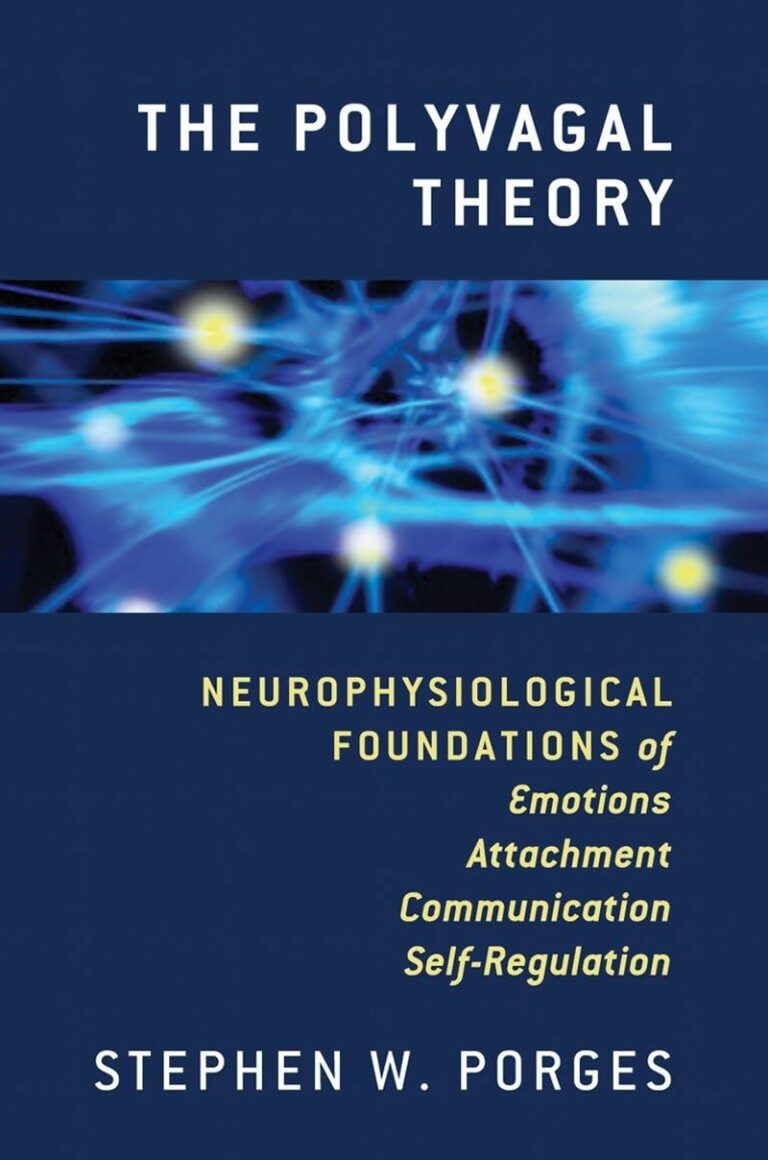
Stephen W. Porges, PhD, a neuroscientist, developed polyvagal theory, a model widely used in trauma-informed approaches and emotional regulation.
This model offers a more refined reading of the parasympathetic system, highlighting the role of the vagus nerve, and one key idea, our biology is organised around the search for safety, and this safety is also built through connection.
Neuroception, the internal radar of safety
Stephen Porges proposed the concept of neuroception, an automatic, unconscious evaluation that scans for signals of safety or danger.
The tone of a voice, a gaze, a posture, timing, an atmosphere, a memory, a smell, a place, a message, a relational energy, can be enough to trigger a shift of state, without the mind knowing how to explain it.
This is why we can rationally “know” that everything is fine, while still feeling alert, tense, drained or frozen.
V. The vagus nerve, ventral and dorsal, the map of states
The vagus nerve is a major link between the brain, the heart, the organs, the voice, the breath, and our emotional states.
In the polyvagal perspective, we distinguish two main “modes”.
Ventral vagal, safety, presence, social connection
The ventral vagal state is associated with safety, presence, grounding and connection. We can breathe more deeply, feel, think more clearly, relate to others and allow ourselves to be supported.
Dorsal vagal, protective immobilisation, shutdown, dissociation, collapse
The dorsal vagal state is associated with protective immobilisation. When the threat is perceived as too great, too intense or unavoidable, the system can shift into slowing down, closing, withdrawal, a state of shutdown, freeze, dissociation or collapse, depending on the person.
Sympathetic mobilisation, fight and flight
Between the two, sympathetic mobilisation carries the fight and flight responses.
This map helps us understand something deeply liberating, I am not “too much”, nor “not enough”, I am in a nervous system state, and a state can be regulated.
VI. Co-regulation, healing also through connection
Co-regulation is the ability of our nervous system to stabilise in contact with another nervous system that offers signals of safety.
Signals of safety, voice, gaze, rhythm, posture
A stable presence, a calm voice, a gentle gaze, a slow rhythm, a safe space, can help the body return towards the ventral vagal state.
Conversely, a tense interaction can amplify dysregulation. This is not a fault, it is relational biology.
This is an essential key, especially when we have experienced periods of insecurity, chronic stress, or situations where we had to manage everything alone.
Concrete examples of co-regulation in everyday life
With a resource person
Sitting near a calm person, or walking side by side without any obligation to speak, allowing the breath to slow down, feeling that we are not being rushed, waiting for the body to settle before looking for solutions.
Through the voice, even at a distance
A grounded voice message, a slow conversation, a reassuring voice, can help the nervous system return towards the ventral vagal state, because prosody, rhythm and silence are signals of safety.
With an animal
The presence of an animal, its warmth, its rhythm, the contact, can support regulation, especially when the body needs a simple, non-verbal connection.
In a safe setting
A space where we feel welcomed, soft light, few stimulations, a respected rhythm, contributes to co-regulation. The setting is part of the healing, because it informs neuroception.
In session, with a practitioner
A stable presence, a gentle gaze, a calm voice, a slow rhythm, can allow the body to leave alertness or freeze. We do not “convince” the nervous system, we show it, through experience, that here it is safe enough to release.
Self-regulation, what I can do on my own to support my system
Self-regulation is what I can offer my body to help it return towards greater safety, even outside of connection.
Micro signals of safety
Feeling my points of support, placing a hand on the heart or belly, slowly looking around me, naming 3 things I can see, 2 things I can touch, 1 thing I can hear, to remind the body that I am here, now.
Breath and vagus nerve
Lengthening the exhale without effort, letting out a sigh, or humming, a soft and low sound, the vibration often helps regulate and release.
Movement and discharge
Walking slowly, gently shaking the hands, stretching the neck, making micro movements, the body comes out of a frozen state more easily when it is invited to move gradually, without forcing.
Inner speech and permission
Saying something very simple, “right now, I am doing my best”, “I can slow down”, “I am safe now”, not as an injunction, but as permission.
When to choose co-regulation
If I feel that I am going in circles, isolating myself, freezing, or that my body remains on alert despite practices, then co-regulation becomes the most direct path, asking for presence, calling someone, or receiving support.
Co-regulation and boundaries, regulating without losing yourself
Co-regulation is not dependency, it is a resource. It becomes healthier when it is associated with clear boundaries.
- Choose people who respect your rhythm and your space.
- Avoid “forcing” yourself to speak if your body is not ready.
- Name a simple need, I just need presence, not advice.
- Leave an interaction if you feel your body contracting even more.
When co-regulation is difficult
If your story has associated connection with danger, the nervous system may be wary of closeness. In this case, co-regulation is built progressively, first through small doses of safety, and sometimes with support that offers a stable and predictable framework.
Fateh Ji, the Reflector Podcast
To go further, I really appreciate Fateh Ji’s approach in the Reflector Podcast, which connects the nervous system, safety, neuroception and the foundations of polyvagal theory.
Episode #4, “Instinctual Self: Neuroception & Regulation”, explores neuroception and regulation in greater depth, while episode #5, “Landscapes of Nervous System”, presents the foundations of polyvagal theory in an accessible way.
Reflector Podcast, Fateh Ji, Episode #4. “Instinctual Self: Neuroception & Regulation” :
Reflector Podcast, Fateh Ji, Episode #5, “Landscapes of Nervous System”:
When the body asks to be supported more deeply
Sometimes, despite these practices, reactions come back, intensify or settle over time.
This often means that the nervous system carries deeper memories, which are asking to be recognised and released.
This is where the support I offer becomes deeply meaningful.
Akashic Records, understanding the origin of patterns
Akashic Records readings allow us to understand the origin of patterns, identify active memories and bring clarity where the mind does not understand.
Light Language, regulation through the voice, rhythm and the energy system
Light Language healing sessions act directly on the nervous system and the energy body, supporting deep relaxation, emotional release and a return to inner safety.
Combined sessions, understanding and release
Combined sessions bring together understanding and release, to support the conscious mind, the unconscious and the body within a global process of regulation.
These approaches are not intended to force change, but to support the body where it is ready to let go, at its own rhythm, in respect of its natural intelligence.
Conclusion
✨ Nervous system responses are never mistakes.
✨ They are precious messengers on the path of balance.
✨ When they are listened to, they become gateways of transformation.
Sources
Stephen Porges, Polyvagal Theory, presentation and key concepts, Polyvagal Institute.
Stephen W. Porges, recent review article on the state and clinical applications of polyvagal theory, PubMed Central.
Autonomic nervous system, sympathetic and parasympathetic, basic notions, StatPearls, NCBI Bookshelf.
Reflector Podcast, playlist YouTube, Fateh Ji.