
My Panchakarma Experience in Kerala
28 Days to Bring My Body, Breath and Life Back into Motion
I went to Kerala for a 28-day Panchakarma with a simple and deep intention: to bring order back into my body, soothe my digestive system, regain energy and realign myself from within. Here is the story of this physical journey.
Why I Went to India for a Panchakarma
I needed a reset.
The threshold of forty is not a myth. For months, perhaps even years, I had been carrying a fatigue I could no longer minimise. A fatigue that was not always spectacular, but deeply installed. A fatigue that blurred momentum, slowed down projects, weighed down the body and eventually made me believe it was normal. At some point, I felt I could no longer avoid the subject. I had to choose myself. To choose my body. To choose my health seriously.
It was in this state of mind that I left for a 28-day Panchakarma in Kerala, India. I did not go there looking for a wellness break in the touristic sense of the word. I went there for real deep work. My intention was clear: to deeply cleanse the digestive system, regain energy, but also bring order back into my eating, emotional, spiritual and relational routines. I needed to return to a form of alignment.
To move into another level of presence with myself.
Entering the Rhythm of the Place
Once there, each day was structured. Early wake-up, hot water, treatments, yoga, consultations, simple meals, silence, poojas, going to bed before 9 p.m. or almost. At first, this rhythm can seem strict. In reality, it acts like a matrix. It removes unnecessary options. It reduces dispersion. It brings the body back into a simpler language.
Every day, I had a consultation with the Ayurvedic doctor. It was a true guiding thread. We adjusted the treatments, observed transit, sleep, energy, appetite, weight, mood and reactions to the therapies. I found this very precious. The treatment was not fixed. It evolved with my state.
The treatments always began with a chant. Sitting on a small stool, I would hear this ancient invocation, recited before the massage, as a way of opening the therapeutic space. I loved this idea that we do not begin only with a technical gesture, but with an intention. It gave a very particular tone to the experience. The treatment was not only physical. It also involved attention, respect and presence.
Ayurvedic Massages: Between Surprise, Modesty and Surrender
Ayurvedic massages were one of the first major changes of scenery during this stay. They were deep, enveloping and highly codified. It began with the head, shoulders and back, then came the full-body massage with warm oil, often with four hands. There was almost nothing between the body and the wooden table, just a towel. At times, it was intense. Very far from a cocooning massage in the Western sense.
At first, I was also destabilised by the protocol itself. I had to turn at the right moment, understand without always being given explanations, follow a rhythm already perfectly known by the therapists. Sometimes I had the impression that I had to guess. As if the body had to enter into an ancient choreography.
There was also the question of nudity, which made me feel very uncomfortable at the beginning. Then, very quickly, that discomfort faded. I understood that it mainly allowed the massage to unfold without interruption, without seams, from head to toe. The warm oil created a kind of cocoon. The treatment became a continuous, unified experience, without barriers. It is surprising how quickly the body gets used to what, the day before, still seemed unthinkable.
The First Days: Warmth, Trust and the Body Beginning to Move
The first two or three days felt like a kind of threshold. Massages, sauna, good food, discovering the place, first consultations. A gentle entry into trust. I was surprised by the depth of the treatments, by their intensity, and already aware that something much broader was going to take place.
The objective set by the doctor was clear: to work on digestion and transit, cleanse the intestine, reduce stagnation, and help the nervous system relax. Very quickly, the word that kept coming back was aggravated Vata, on a rather Vata-Kapha terrain, then later a more dominant Kapha profile. In concrete terms, for me, this showed up as constipation, lack of appetite, fatigue, night waking, internal stress, a feeling of heaviness and blockage.
The Basti Phase: Days 3 to 12
From February 15 to 24, I entered what, with hindsight, was the most demanding phase: bastis, meaning enemas, combined with massages, sauna, herbal medicines and castor oil to support transit.
On paper, it seemed simple: cleanse, restart, circulate. In the body, it was something else.
I felt resistance. Despite the enemas, walks, yoga, heat and medicines, having a bowel movement remained difficult. My belly was often bloated. There was gas, sometimes very present at night. At times, I had the paradoxical feeling of being both constipated and emptied. Transit was moving, but incompletely.
The doctor adjusted the doses, modified the preparations, changed the concentration of the enemas, increased the castor oil, searched for the right balance. I observed in real time how much the body cannot be forced. It responds, but at its own pace.
When the Mind Begins to Resist Too
The meals during this period were austere. Soups, vegetables, kitchari, fruit. At first, I accepted this very easily. Then, as the days went by, something contracted mentally. I eventually felt as if I were in prison. It was not so much a brutal hunger as a deep weariness. The repetition of the same dishes, the lack of variety, the fact of having to follow without negotiating.
That is when I understood that a cleanse is not only a matter of willpower. It also brings to light our most ordinary attachments: taste, habit, distraction, the desire to choose.
Sleeping a Lot, Sleeping Differently
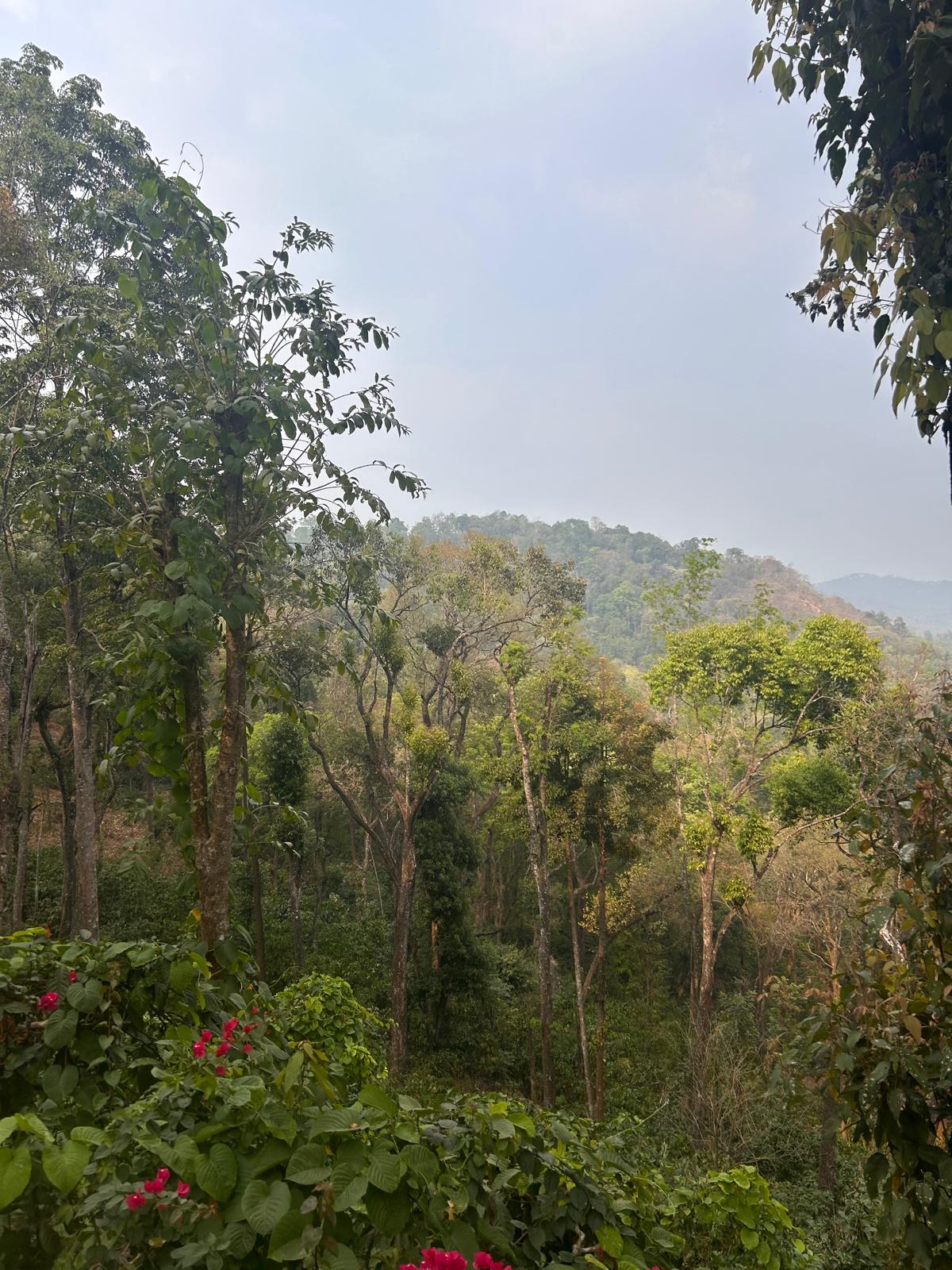
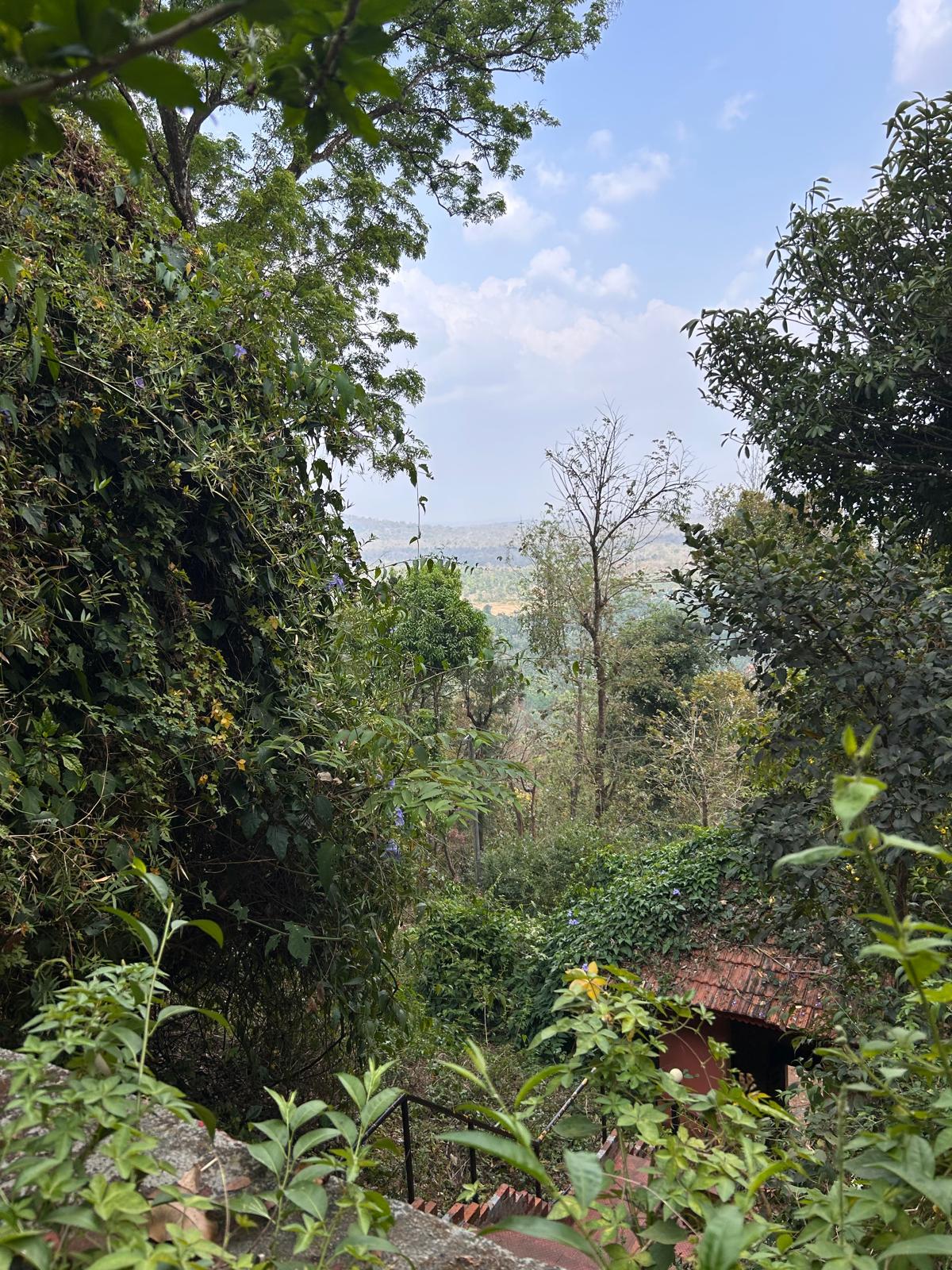
In the very green mountains of Kerala, I probably slept more than ever before in my life. I regularly fell asleep before 9 p.m. and, despite that, it was often difficult for me to get up for 6 a.m. yoga. I could have judged myself. I could have told myself that I had to follow the perfect rhythm. But I did not want to turn this cleanse into a competition. The doctor, in fact, welcomed this need for sleep as something appropriate.
And yet, sleep was not linear. Nature was omnipresent, magnificent, but noisy. At night, the bathroom of my bungalow received unexpected visitors: spiders, slugs, ants, frogs. I often felt my nervous system in a state of alert, as if a part of me could not fully leave survival mode. Here again, the cleanse was not only revealing physical symptoms. It was exposing deeper reflexes.
A Total Immersion in the Nature of Kerala
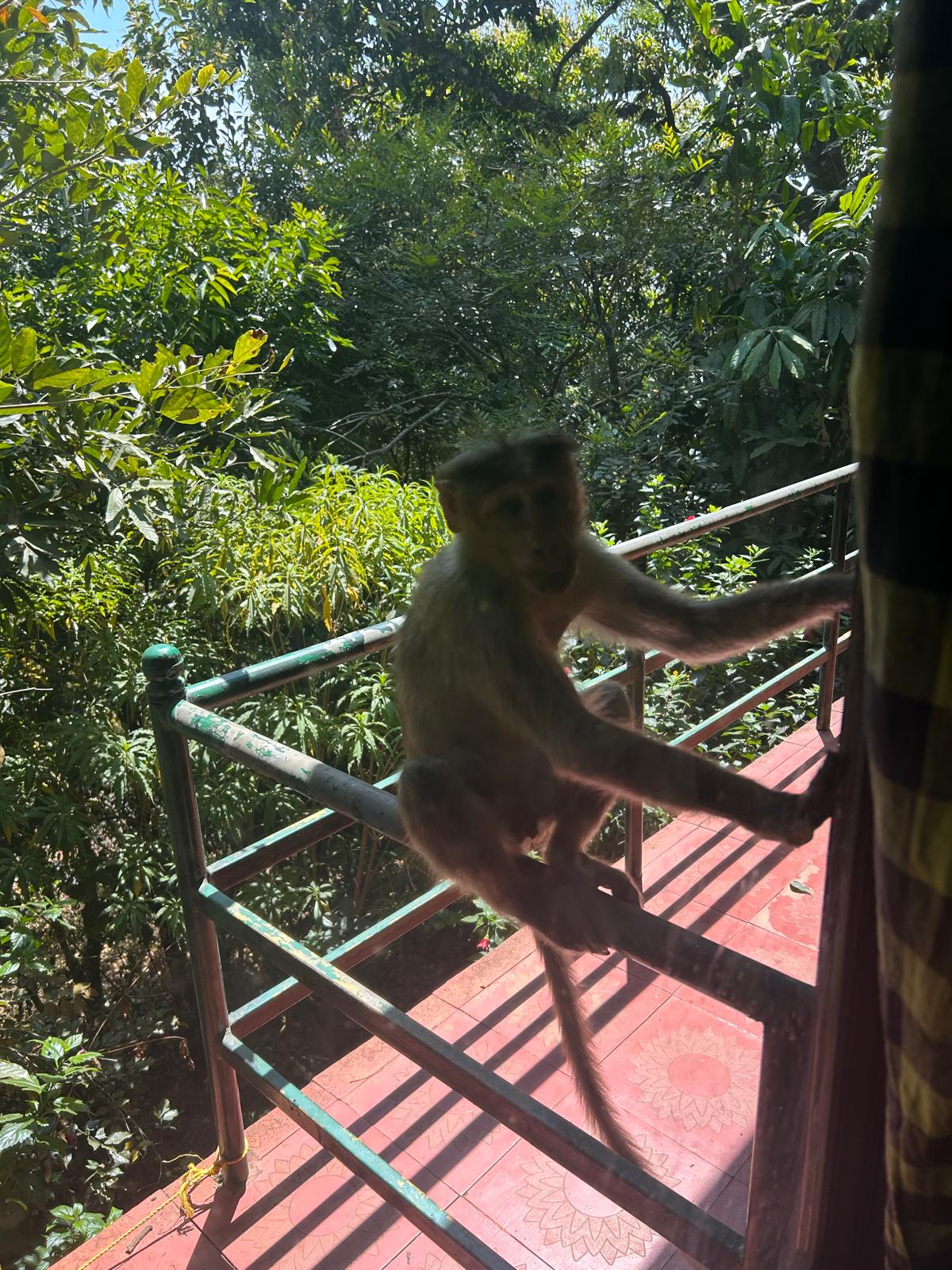
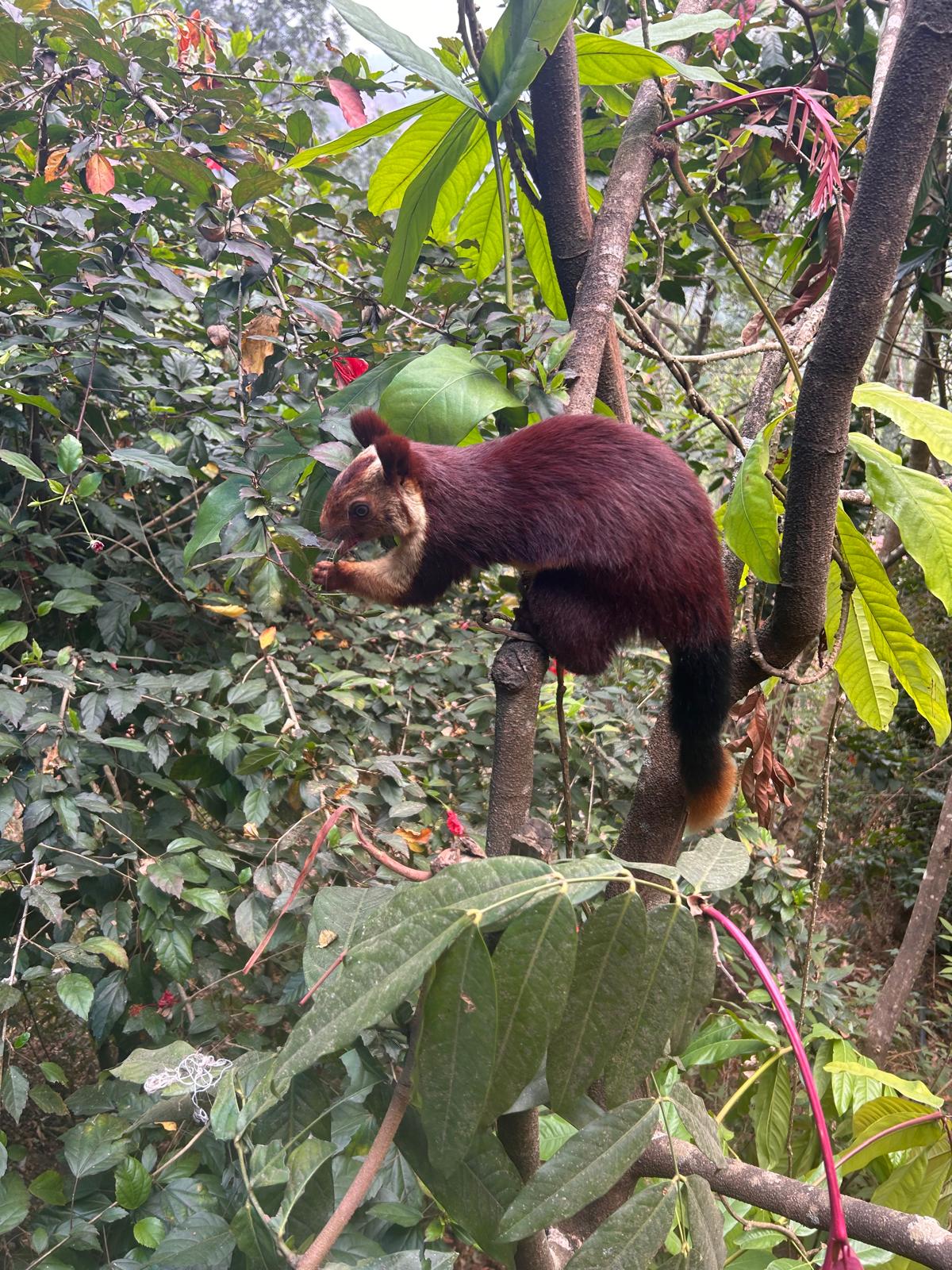
This stay was also a bath of living nature. There were monkeys, always slightly unpredictable, arriving in groups and taking over the place with the energy of turbulent children. There were also giant squirrels, impressive, almost unreal, with their long tails and such a distinctive sound. The place was both therapeutic and wild. I had to learn to live with that. To accept not controlling everything.
Ayurvedic Food: Simple, Delicious and Demanding
Outside the intensive treatment phases, the food was delicious. I loved the subtlety of many dishes, the warmth, the simplicity, the care given to textures. Every Sunday lunch, there was a special meal, more festive, with several preparations. It was awaited like a breath of fresh air.
I also learned a great deal. Starting meals with a seasonal fruit. Avoiding mixing fruits together. Eating slowly. Chewing for a long time. Avoiding talking during meals so as not to swallow air and disturb digestion. Eating warm food, especially with a Kapha terrain. Not eating because it is time, but because there is genuine appetite.
It may seem simple, but for me, it was a real questioning. I realised how often I was eating automatically.
The Ghee Phase: Days 13 to 17
From February 25 to March 1, I experienced what became the most striking phase of the cleanse: taking medicinal ghee in the morning, with doses increasing progressively. This was the Sneha Pana phase, a central stage of preparation for deep Panchakarma.
The doses, in my case, were as follows:
- Day 1: 70 mL
- Day 2: 110 mL
- Day 3: 140 mL
- Day 4: 200 mL
- Day 5: 240 mL
Drinking melted ghee upon waking, several days in a row, is not insignificant. The body slows down. Appetite almost completely disappears. Energy drops. Time changes texture. I ate very little, often just porridge once a day, and I became extremely selective in my interactions. I needed to preserve my energy. I read a lot. I wrote enormously. I observed. Everything seemed both slowed down and amplified.
It was during this phase that I most clearly experienced the difference between wanting to eat and true hunger. This distinction, which may seem ordinary, deeply moved me. I saw how much food can be an emotional, compensatory, social and nervous gesture. And how, conversely, eating little but consciously can open a very subtle space of perception.
Meditation, Journaling and Deep Memories
On March 4, Vamana took place, meaning therapeutic vomiting. The day before, I wrote down everything I wanted to let go of: limiting beliefs, memories of past relationships, attachments, invisible weights.
The next morning, from 6 a.m., I was ready.
I burned that paper on the morning of the treatment. It was my own ritual. A way of entering that moment consciously.
I drank a total of 9 litres:
- 3 litres of warm milk
- 3 litres of a licorice decoction
- 3 litres of salted water
And then, I had to vomit. Gradually. Let everything come out.
I did not experience it as a spectacular ordeal, but as a passage. I knew that something had to leave the body. And that I had to let the process go all the way. It was neither pleasant nor romantic. It was raw. Organic. Radical. And at the same time, deeply coherent with the logic of the cleanse.
What struck me afterwards was that this intensity was followed by a real change. More energy. More clarity. Better sleep. Emotional relief. As if the whole system had needed this passage in order to reorganise itself.
The Regeneration Phase: Nasya, Shirodhara and Reconstruction
The final week was the rejuvenation phase: massages, individual sauna, exfoliating powder for the skin, Nasya for the nose, Shirodhara to calm and nourish the nervous system.
After the purification phase, I felt the work becoming more integrative. Less removing, more rebuilding. My energy was coming back. I was sleeping well. Sensations were becoming clearer. My belly was calmer. My skin was more supple. I even had the impression that something had brightened in my face.
It was also during this period that I felt a more tangible emotional release. Positive memories were returning. Regrets were losing their grip. A simpler form of freedom was settling in.
The Poojas, Vishnu and What This Journey Shifted Within Me
This journey was much more than a digestive cleanse. It brought me face to face with repetitive patterns, transgenerational dynamics, my way of relating, giving, dispersing myself and protecting myself.
The poojas I attended touched me deeply. A pooja, in the Hindu tradition, is a ritual of offering, prayer and presence. It is not just something pretty or exotic. It is a way of entering into relationship with an intelligence of life that is larger than oneself.
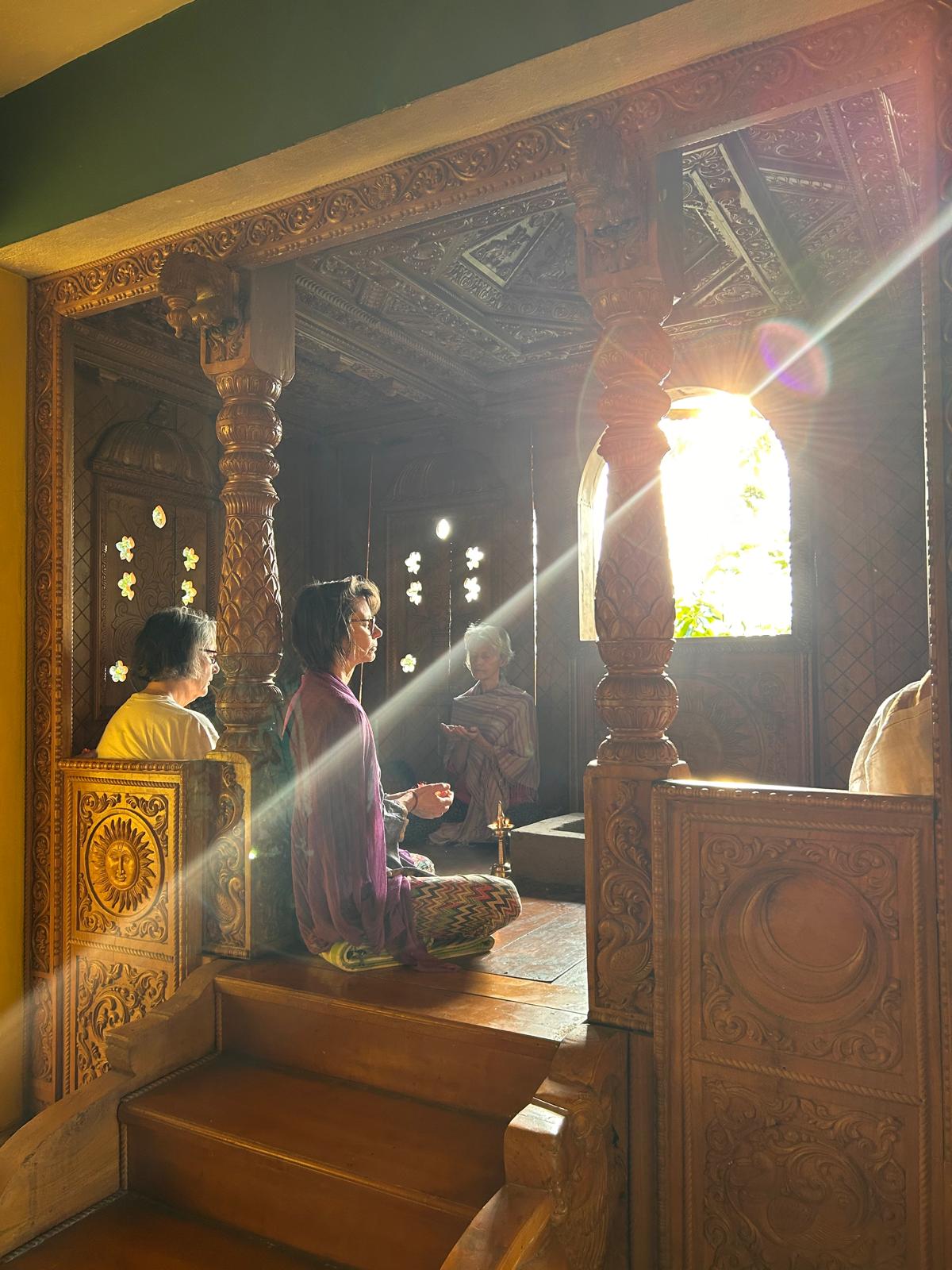
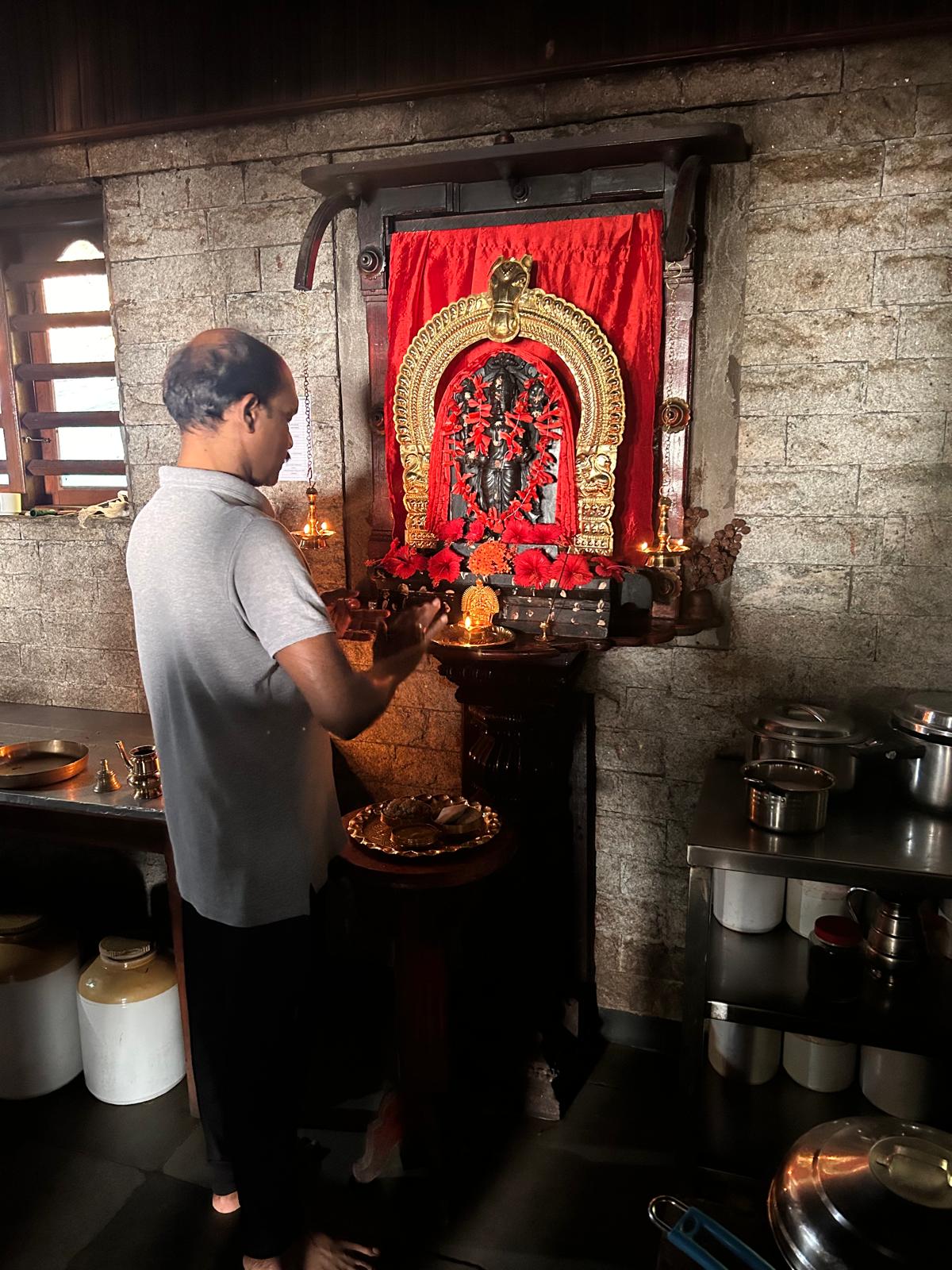
I felt a particular closeness to the energy of Vishnu, the energy of preservation, maintenance and continuity. This stay reminded me of something both very simple and very demanding: taking care of myself is not a detour from my mission. It is a condition for it.
As a therapist, I am not here to save. I am here to guide, in respect of each person’s sovereignty and free will. This nuance changes everything. It allows service without sacrifice.
After the Cleanse: Goa, Transition and First Concrete Effects
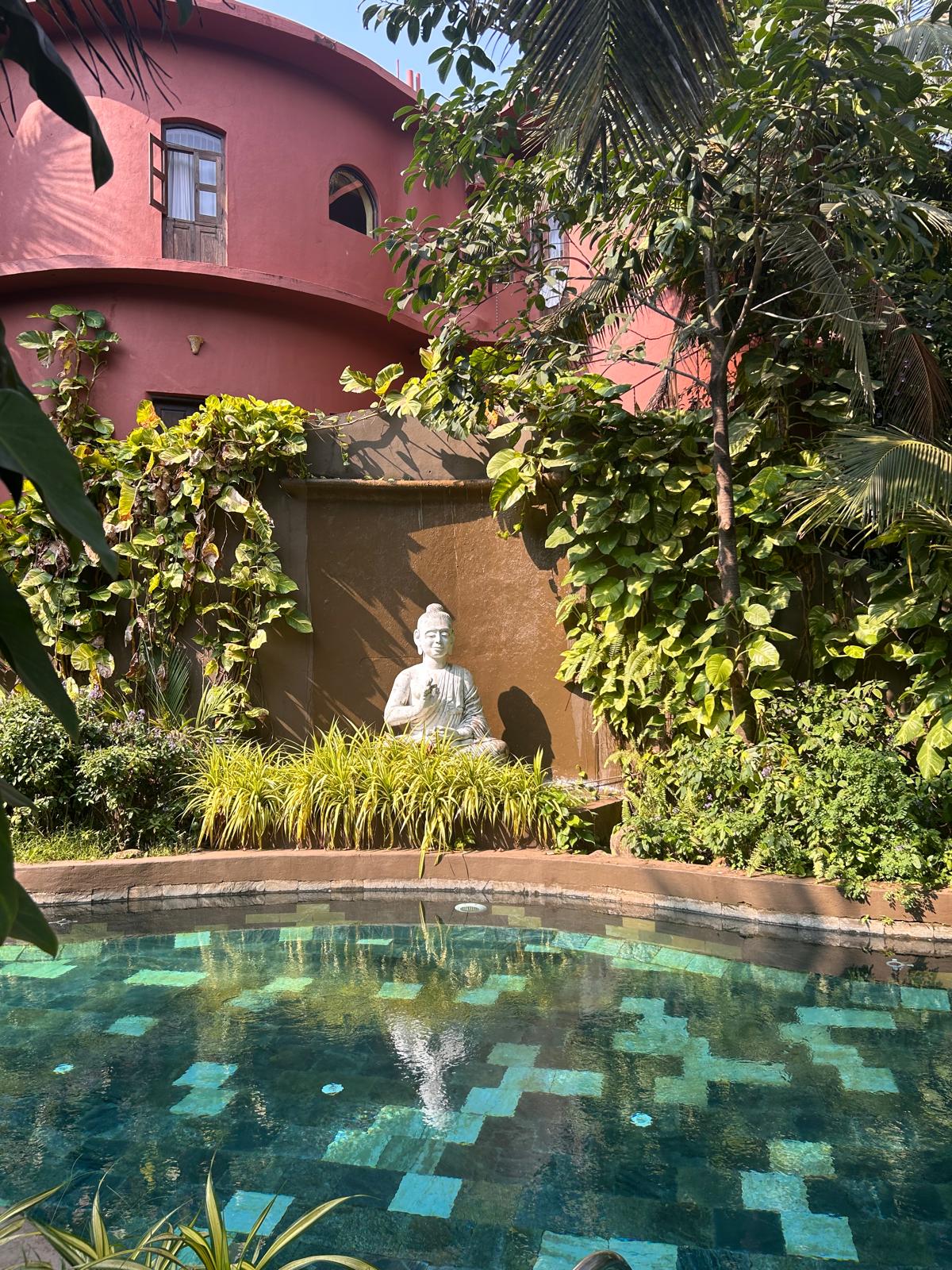
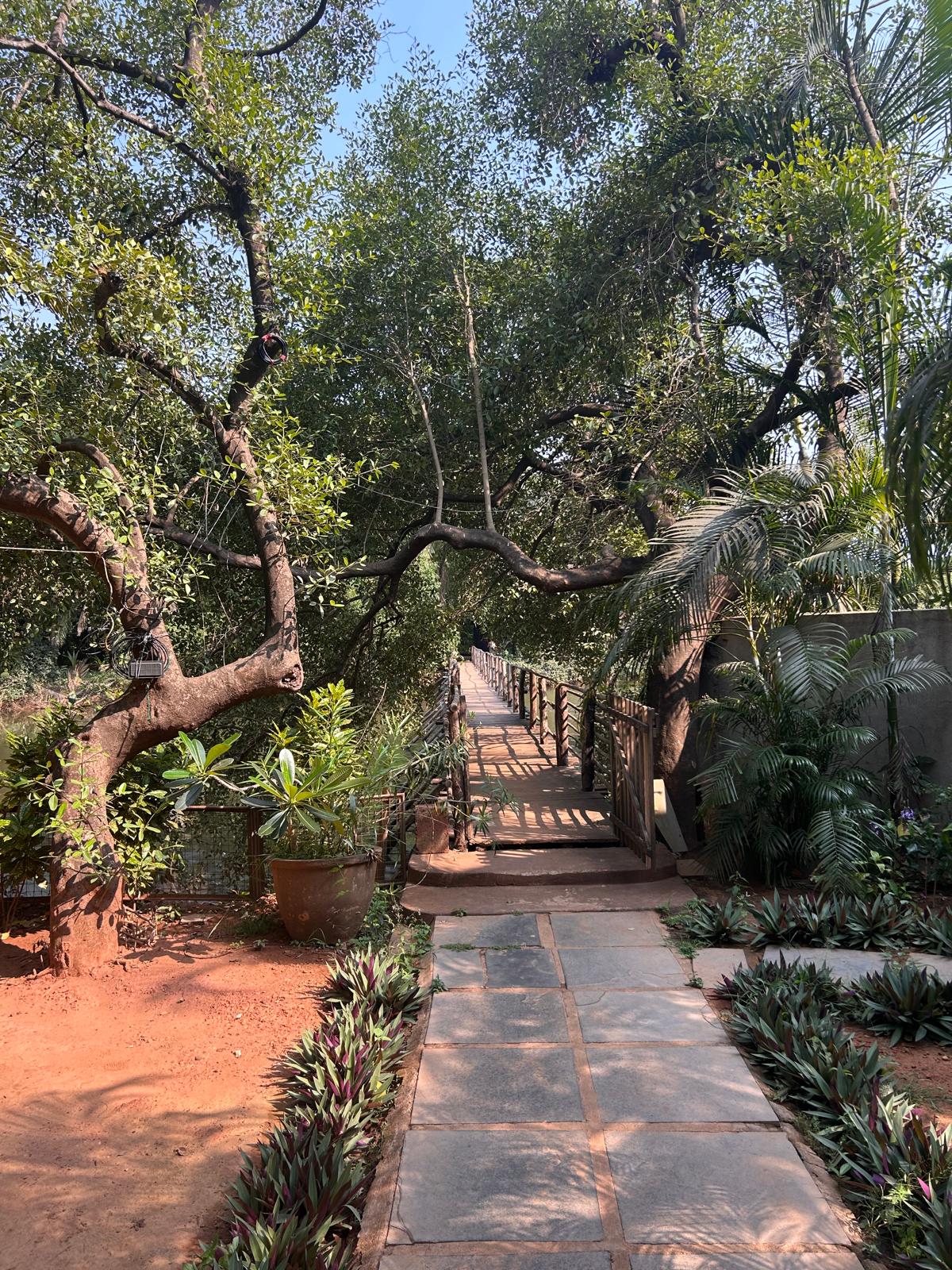
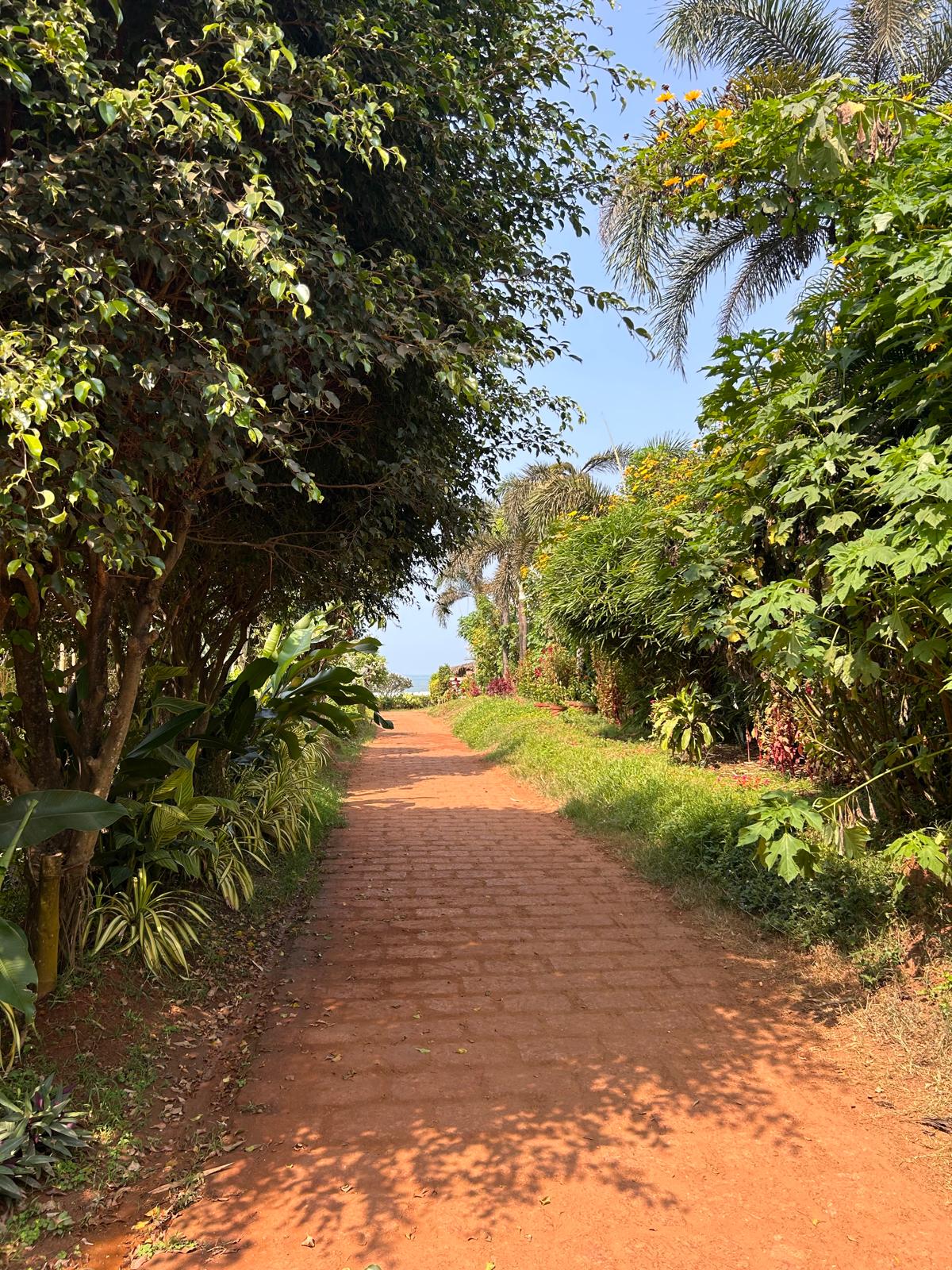

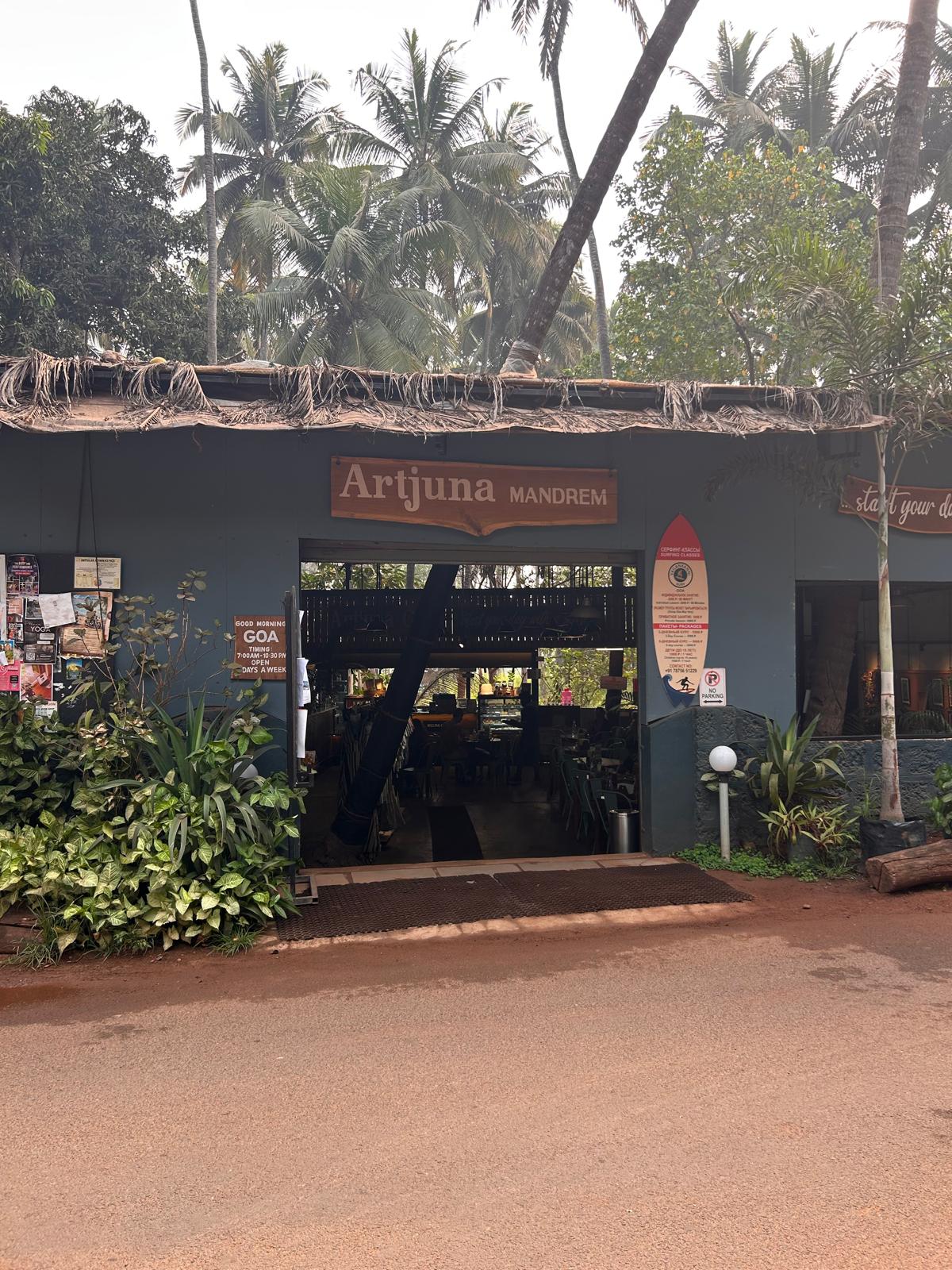

After the cleanse, I spent a few days in Goa. The sea, the light, drop-in yoga classes, the swimming pool, walks, fresh fruit and vegetables, non-vegetarian food again. A gentle transition before returning to France. A different way of landing.
At day 15 after the cleanse, I can already notice very concrete things. My belly is no longer inflamed as it was before. The inner relaxation is real. I feel a soothing around the vagus nerve, a healthier stability, an energy that is more grounded in everyday life.
Not everything is resolved, however. Constipation remains an underlying issue, one that also requires deeper medical exploration and long-term dietary work. But something has undeniably shifted.
I did not come back perfect. I came back more attentive. More stable. More conscious. With less inner noise. With clearer routines. With a more honest relationship with my body.
And sometimes, that is already immense.
Read next:
What my Panchakarma in India taught me about Ayurveda, yoga, digestion, sleep, rhythm and the art of living.
What is Panchakarma in Ayurveda? A simple introduction to the five therapies, the three phases of the treatment and their purpose.

Learn to listen to the messages of your nervous system to transform stress, hypervigilance or freeze responses into pathways of regulation, inner safety and lasting soothing.