
Panchakarma, Ayurveda and the Art of Living
12 Essential Teachings I Brought Back from Kerala
During 28 days of Ayurvedic treatment in Kerala, I did not only receive therapies. I learned another way of inhabiting my body, eating, sleeping, practising yoga and taking care of my energy. Here are the most precious pearls of knowledge I carry from this experience.
1. The real question is not “What is my dosha?”, but “What is out of balance today?”
One of the first things the doctor explained to me was the difference between Prakriti and Vikriti.
Prakriti is the birth constitution. The underlying terrain. The way we are made, with our natural tendencies.
Vikriti is the current state of imbalance.
This distinction changes everything. You may have a rather Kapha, or Vata-Kapha, constitution and still go through a period where Vata becomes aggravated: constipation, insomnia, agitation, dryness, anxiety, a feeling of being blocked. Ayurveda does not freeze the human being into a label. It observes movement.
2. Digestive fire is at the centre of everything
Throughout the whole treatment, even when the subject was weight, energy, skin, sleep or mood, the central point remained the same: digestion.
In Ayurveda, digestion is not limited to the stomach. It concerns the ability to transform. To transform food, of course, but also emotions, stress, experiences, rhythms and changes. When this digestive fire weakens, everything can become heavier, more confused, more stagnant.
I understood that stable energy cannot be built on chaotic digestion.
3. Constipation also speaks of the nervous system
I arrived with a subject of chronic constipation. During the treatment, there were enemas, castor oil, dietary adjustments, herbs, foot baths and advice about posture on the toilet. All of this was useful. But I also saw that constipation is not only a matter of stools.
It touches the nervous system. Relaxation. Inner safety. The ability to let out. The fear of letting go. Rhythm. The way we occupy our space. In my own experience, this subject even opened onto much older and very deep memories.
The body spoke beyond the symptom.
4. Sleep begins long before bedtime
One of the great teachings of this treatment is that sleeping is not simply about going to bed. Sleep is prepared.
The doctor insisted on several very concrete points: limiting liquids in the evening, avoiding screens before bedtime, taking a warm foot bath with salt, breathing through the left nostril to calm the system, listening to a gentle meditation, and going to bed early.
Sleep is not a switch. It is a landing.
5. Silence during meals is medicine
At the centre, it was recommended to eat in silence. At first, this may seem strict. In reality, it is one of the most powerful pieces of advice I received.
Not speaking while eating allows us to chew better, swallow less air, reduce gas and bloating, stay present with the meal, feel satiety more quickly and avoid dispersing ourselves into the energy of others.
I realised how much lighter meals become when we do not overload them with noise, nervous exchanges or automatic consumption.
6. Wanting to eat and being truly hungry are not the same thing
This was one of my greatest realisations, especially during the ghee phase. For several days, I was hardly hungry. And yet, at times, I wanted to eat. I wanted taste. Texture. To break the emptiness.
Ayurveda forced me to distinguish between habit, craving, need and real hunger.
This distinction is incredibly powerful. It changes the relationship with the body, control, comfort, frustration and trust.
7. Warm, simple and well-chewed food is sometimes better than sophisticated food
Among the basics that deeply struck me:
- starting the meal with a seasonal fruit, while avoiding mixing several fruits together
- eating warm food, especially with a Kapha constitution
- chewing well
- avoiding drinking too much while eating
- not combining certain dairy products with meat, fish or certain fruits
- choosing simple, clear and digestible food
It is not spectacular. It is not trendy. But it is incredibly structuring. Simplicity does not impoverish digestion. Very often, it saves it.
8. Yoga is here to support the state of the moment, not to perform
During the treatment, there were days when I could practise yoga, other days when I simply needed to walk, and others when rest was clearly more appropriate than disciplined practice.
This is a lesson I find precious. Yoga is not an identity performance. It is not a place where we prove that we can hold on. It is a tool of adjustment.
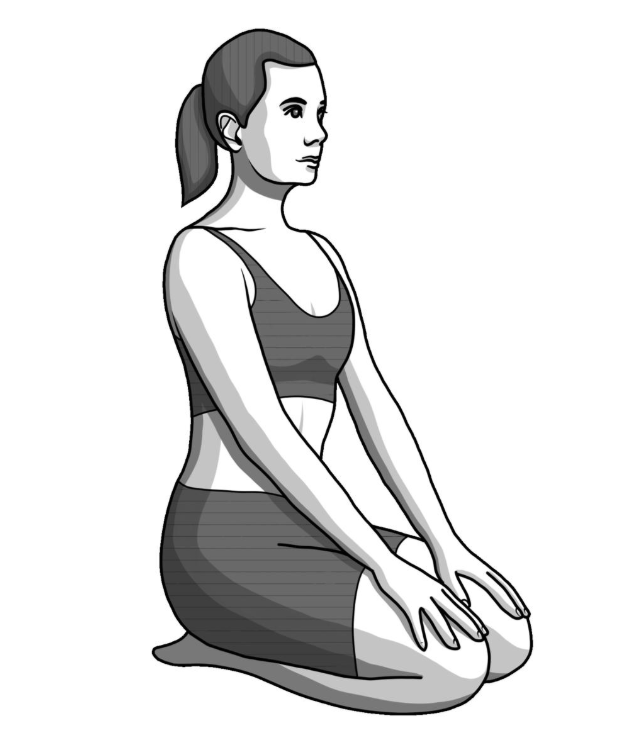
At certain moments, walking was the most aligned option. At others, a few sun salutations. At others again, Vajrasana after meals to support digestion. The right yoga is the one that supports life, not the one that flatters the ego.
9. Small daily gestures truly change health
Ayurveda gives surprising importance to things we often treat as secondary:
- posture on the toilet
- squatting or using a footstool
- drinking warm water
- waking up early
- cleaning the tongue
- doing oil pulling every morning
- walking after certain remedies
- avoiding daytime sleep
- eating dinner early
At first, this may seem almost too simple. Then we understand that health is built precisely there: in the repetition of small gestures.
10. Purifying does not mean brutalising
Before experiencing Panchakarma, I imagined purification as something rather radical. In reality, the process is much more intelligent than that. It follows a logic in several stages: preparing, mobilising, eliminating, rebuilding.
First, the terrain is prepared. Then circulation is encouraged. Only then do the major procedures take place. And afterwards, it is necessary to nourish again, calm, re-establish and stabilise.
This applies to the body, but also to the psyche. We do not release durably without preparation. And we do not integrate real change without a reconstruction phase.
11. Healing can be technical and sacred at the same time
Each treatment began with an ancient invocation. And before certain remedies were taken, a mantra was recited. I was deeply touched by this way of connecting therapeutic technique to something greater than itself.
In this vision, healing is not reduced to the effectiveness of a protocol. It is also rooted in a quality of presence. Humility. Right intention. Recognition that healing cannot be manufactured only through control.
This link between healing and the sacred spoke to me deeply. It takes nothing away from the rigour of the treatment. It gives it depth.
12. The real Panchakarma may begin after the treatment
One of the great lessons of this experience is that the treatment does not end with the final massage. It asks for an after. A time of transition. Daily choices. A gentle but real discipline.
What I brought back with me is not only a powerful memory. It is a new requirement of inner hygiene:
- sleeping better
- eating more consciously
- protecting my energy
- setting boundaries
- moving every day
- respecting my digestive system
- taking prevention seriously
Ayurveda reminded me that health is not limited to the absence of symptoms. It is a quality of relationship with oneself.
What I carry from it, deep down
If I had to summarise this experience in one sentence, I would say this: Panchakarma did not teach me how to detox, it taught me how to live with more listening, rhythm, simplicity and presence.
I saw there that digestion and the nervous system are intimately connected. That sleep needs preparation. That silence nourishes. That warmth reassures. That the body needs simplicity. That routines can be liberating. And that taking care of oneself is not selfish. It is what then allows us to serve more accurately.
For me, this is probably where the most beautiful pearl of knowledge lies: healing does not always mean becoming someone else. It often means returning to a truer relationship with one’s own body.
Read next:

My Panchakarma Experience in Kerala
An intimate account of my Panchakarma in Kerala: digestion, ghee, Vamana, emotions, fatigue, yoga and inner rebirth over 28 days.

What is Panchakarma in Ayurveda? A simple introduction to the five therapies, the three phases of the treatment and their purpose.

Learn to listen to the messages of your nervous system to transform stress, hypervigilance or freeze responses into pathways of regulation, inner safety and lasting soothing.